Chapter One \u00b7 1925
One Cow Named Hopper
Every district has a founding object, and this one's was a cow. In 1925, Thomas Gilbert Lee and his wife Elizabeth started T.G. Lee Dairy with the inheritance Lee received from his father Charles: twenty acres of land, one cow and a banknote. The land sat on what was then the outskirts of Orlando, a barn and a grazing area where the city now runs east. The company's own story page gives the cow her due: "One cow and 20 acres of land was all it took for Thomas Gilbert Lee and his wife, Elizabeth, to start what is now Central Florida's largest dairy, and it all started with a family cow named Hopper."
It is worth pausing on how small that is. Twenty acres and a single cow is not a company, it is a family making a start, and the whole district, the plant, the shopping center land, the sandwich counters and the bars, traces back to it. Orlando Magazine, looking back across 85 years, found the same small picture: a barn and grazing area for a few cows, all that occupied the land when the Lees began.
Then and Now
The pasture became a plant at 315 North Bumby Avenue, and the plant is still the district's landmark. The guide today describes the T.G. Lee dairy plant anchoring Robinson Street, its mural cow watching over the strip. Hopper has a mural now. She earned it.
Chapter Two \u00b7 1934
The Milking Parlor That Drew a Crowd
Nine years in, Lee did something no sensible farmer needs to do: he built for an audience. In 1934 he turned the land into one of Orlando's first attractions, a dairy milking parlor where crowds gathered to watch cows being milked by machines. Machine milking was new enough to be a show, and the dairy at the edge of town became a place Orlando went to look at, years before the city learned to build attractions on purpose.
The show grew into an industry. The plant that rose at 315 North Bumby Avenue later processed more than 230,000 gallons of raw milk a day, a number worth setting next to the founding inventory: one cow. Between Hopper and the plant sits the whole arc of the district, a family farm that industrialized in place while the city grew out to meet it.
Then and Now
The crowds never really left the district; they changed what they watch. Today they gather for Tasty Takeover, the weekly food truck night in the guide, in the lots a short walk from the plant that first taught the neighborhood to draw an audience.
Chapter Three \u00b7 1956 to 1968
The Blocks Grow Up Around the Plant
By the 1950s the surrounding blocks had a working commercial character, and the dairy itself supplied the land for the leap. Colonial Plaza opened on January 31, 1956 at East Colonial Drive and Bumby Avenue, one of the first regional shopping hubs in Central Florida, built on a 45 acre tract the T.G. Lee Dairy had occupied before, with ground broken on May 24, 1955. The farm was becoming a city neighborhood, and it sold the acreage to prove it.
The corridors filled in with names that lasted for decades. Ronnie's Delicatessen opened in 1956 and ran to 1995. The Plaza Theatre opened in 1963 as Orlando's first twin screen movie house. And in 1968, Beefy King opened at 424 North Bumby Avenue, family run from the start, steaming roast beef a few hundred yards from the plant gates.
Then and Now
The Plaza Theatre survives as Plaza Live, and Beefy King is still on Bumby in the guide today, the sandwich shop the guide says Orlando would defend in a fistfight. The dairy moved the neighborhood in; the counters and the theater kept it there.
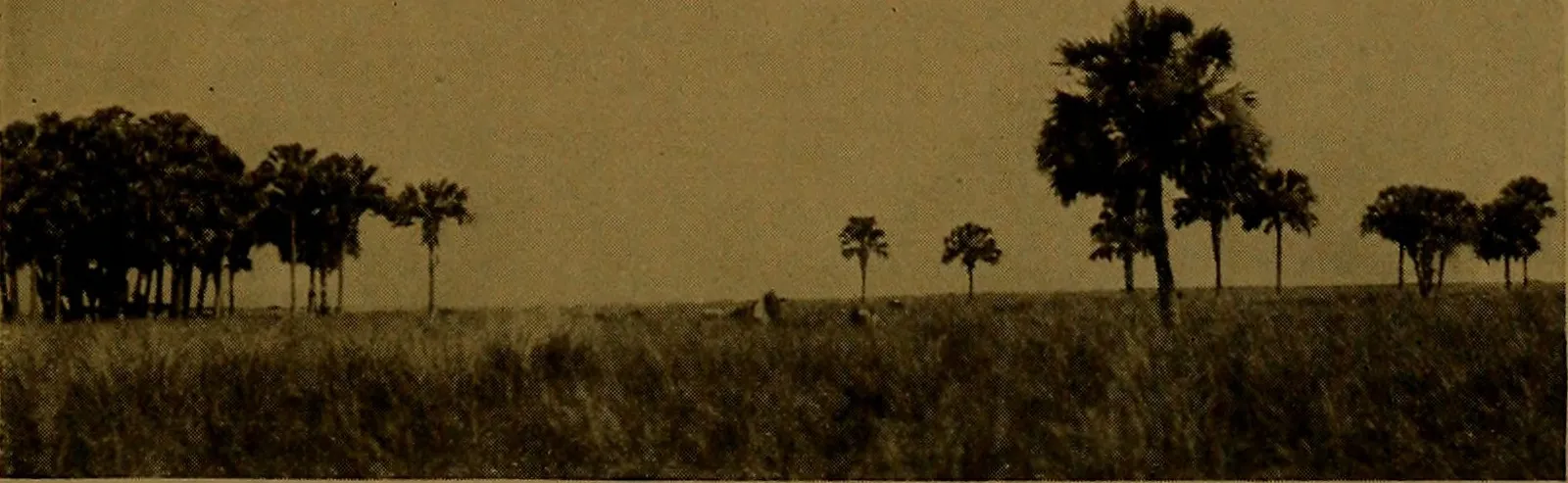
Florida pasture in 1914, from Livestock Farming in Florida. Public domain.
Chapter Four \u00b7 The Processing Years
The Farm Became a Factory
The cows left before the name did. Dairy farming itself wound down, and by a 1992 Orlando Sentinel account dairy farming operations had ceased, but processing continued: T.G. Lee plants operated across the state and its products were sold in supermarkets, convenience stores, restaurants and institutional food service. Beginning in the 1960s the dairy had been among the first in Florida to use artificial cattle breeding techniques. The farm became a brand, and the brand kept the Bumby Avenue plant at its center.
The plant traded hands in 2020. Dairy Farmers of America bought the T.G. Lee main plant at 315 North Bumby Avenue, a 7.85 acre site with four warehouses dating to the mid 1950s, for a little more than $5.8 million, as part of its $433 million bankruptcy auction purchase of 44 Dean Foods facilities. T.G. Lee Dairy now describes itself as a 100 percent farmer owned brand of Dairy Farmers of America. The founder sold the company to Dean Foods before his death in 1986, the record notes, reportedly after milking his first cows in a shack on North Bumby Avenue, near the factory that replaced the pasture.
Then and Now
The warehouses still stand on Bumby, mid 1950s bones and all, while the eating and drinking moved in around them: Stasio's Italian Deli stacking its namesake sub and Sideward Brewing Co. pouring a short walk away, both in the guide today.
Chapter Five \u00b7 2011 to 2016
A Nickname, Made Official
For decades the name was just what people called it. The area of independent businesses around the T.G. Lee Dairy main headquarters was known colloquially as The Milk District, anchored by and named for the dairy at its center. Visit Orlando states it in plain form: the district is anchored by, and gets its name from, a T.G. Lee dairy. The district's own FAQ draws its map, the commercial area between Colonial Drive and South Street, from Orlando Executive Airport to Bumby Avenue.
The food truck era gave the nickname its modern crowd. Tasty Takeover, Orlando's original weekly food truck event, has gathered in the district since 2011. A 2012 account describes the scene at Robinson Street and Primrose Drive, near the T.G. Lee milk factory, with the bars along Robinson Street, The Milk Bar, Sandwich Bar and Spacebar among them, opening their doors so food truck customers could sit inside with a drink.
On October 10, 2016, City Council approval made The Milk District the tenth Orlando Main Street district, a step the district first had to raise $10,000 to qualify for under the City's matching arrangement. Since 2016, the district's own FAQ says, it has built a portfolio of programs: marketing and special events, small business consulting, and technical support for physical improvements to commercial buildings.
Then and Now
The nickname is official now, with a Main Street program behind it, and the food trucks never left: Tasty Takeover is in the guide today, still turning the parking lots behind the Robinson Street bars into a weekly dinner decision.
The Index in the Street Signs
How the Streets Got Their Names
A dairy district confesses its history in its street signs: the hardware man whose avenue became the plant's address, the surveyor who argued against personal names, a sheriff, and one street nobody documented.
- Bumby Avenue: named for Joseph Bumby, homesteader and businessman, founder of the Bumby hardware stores. The T.G. Lee plant stood at 315 North Bumby and Beefy King at 424 North Bumby, which makes Bumby the district's spine in both its dairy and dining eras.
- Robinson Street: named for Samuel Robinson, city surveyor. There is a fine twist on the record: on July 4, 1912, Alderman Samuel A. Robinson addressed the City Council on street naming and urged eliminating personal names, a change that would have involved Robinson Avenue itself.
- Anderson Street: named for Julius Caesar Anderson, Orange County sheriff.
- Primrose Drive: not documented. The research behind this page hunted specifically for whether Primrose honors the flower, a person or a place, and found no credible source for any of them. The street is documented as a Milk District corridor, the cross street of the original Tasty Tuesdays lot near the factory, but its naming origin remains unverified, and it should not be presented as the flower without a source.
Crystal Lake Drive, Hampton Avenue and Graham Avenue likewise have no published namesake in the sources consulted. Hampton is documented early, paired with Palmer Street for an east entrance to Greenwood Cemetery that was to stay accessible at all hours, but that account gives no Hampton etymology.
Then and Now
Read the signs on a walk and the district reads itself back: Bumby for the plant and the sandwich counter, Robinson for the bars and the food truck lots, Primrose for the cross street where the trucks first gathered, its own name still a mystery.
The Story, On Foot
Walk It Today
Start at the plant on North Bumby Avenue, where the mural cow keeps watch over the strip, and walk the spine the street chapter just read to you. Beefy King is at 424 North Bumby, family run since 1968, and Se7en Bites draws its morning line on the same corridor the dairy built.
Then turn onto Robinson Street and graze the present tense: Stasio's Italian Deli for the namesake sub, Sideward Brewing Co. pouring near its tanks, Iron Cow doing its hi-fi sushi and club double act, and, on the right night, Tasty Takeover filling the lots behind the bars. A district that began with one cow now feeds a neighborhood, and it still does it within a few blocks of the plant.
Images and sources
Every photograph on this page is in the public domain. Follow any credit to its archive record.
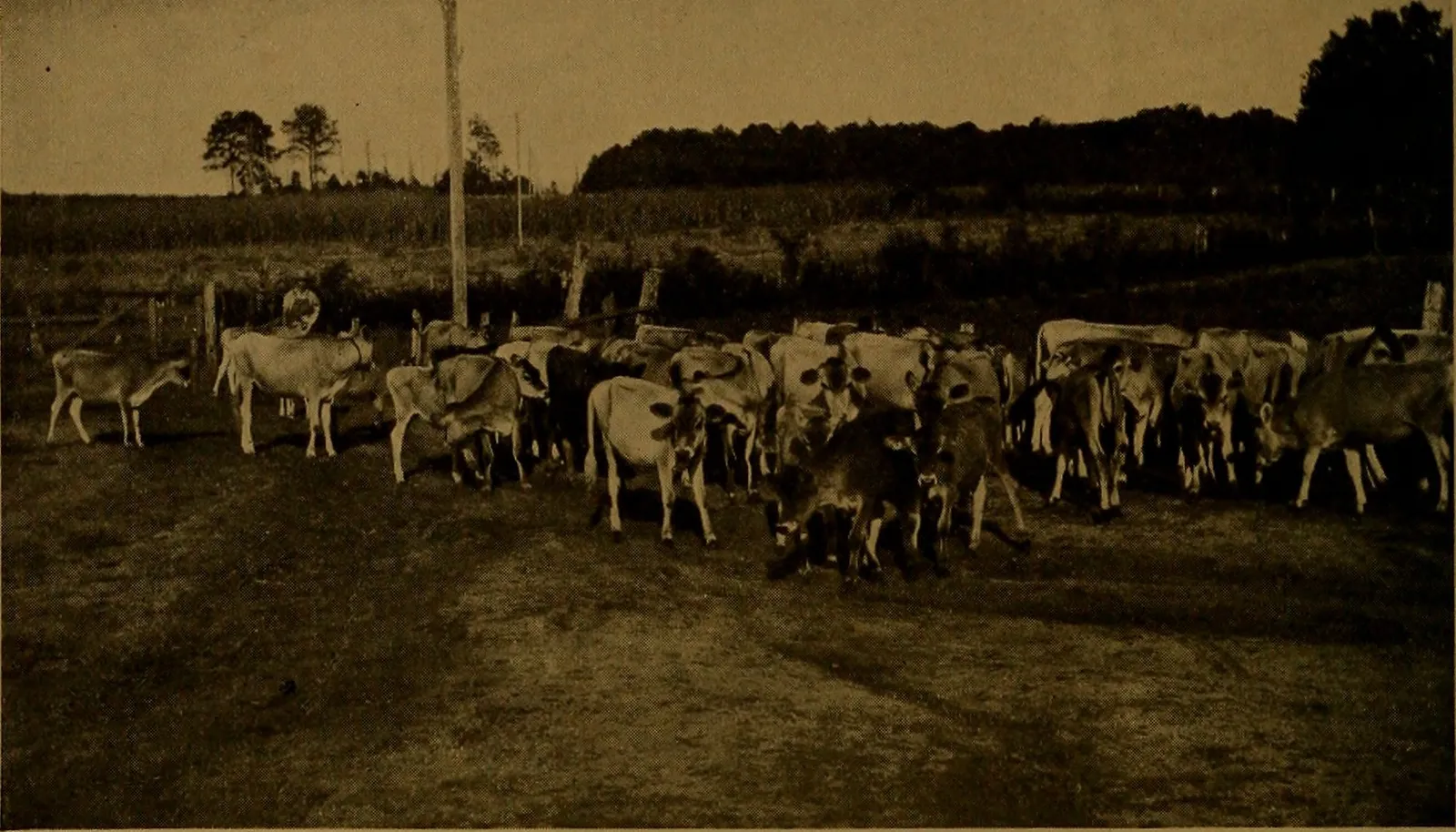
- Florida dairy herd in pasture, 1914: Wikimedia Commons, from Livestock Farming in Florida (Florida East Coast Railway, 1914). Public domain.
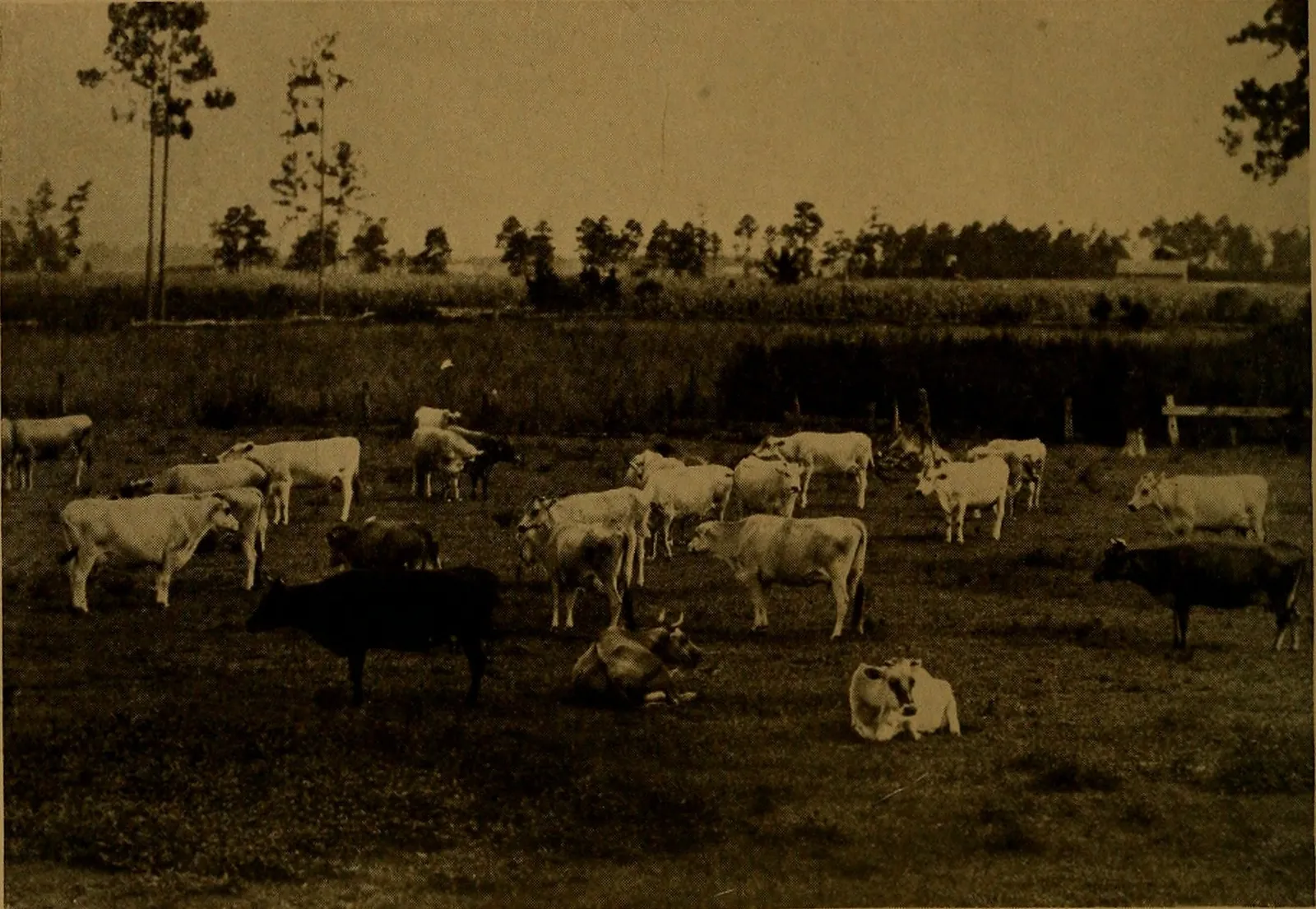
- Dairy cattle grazing in a Florida pasture, 1914: Wikimedia Commons, from the same 1914 farming guide. Public domain.
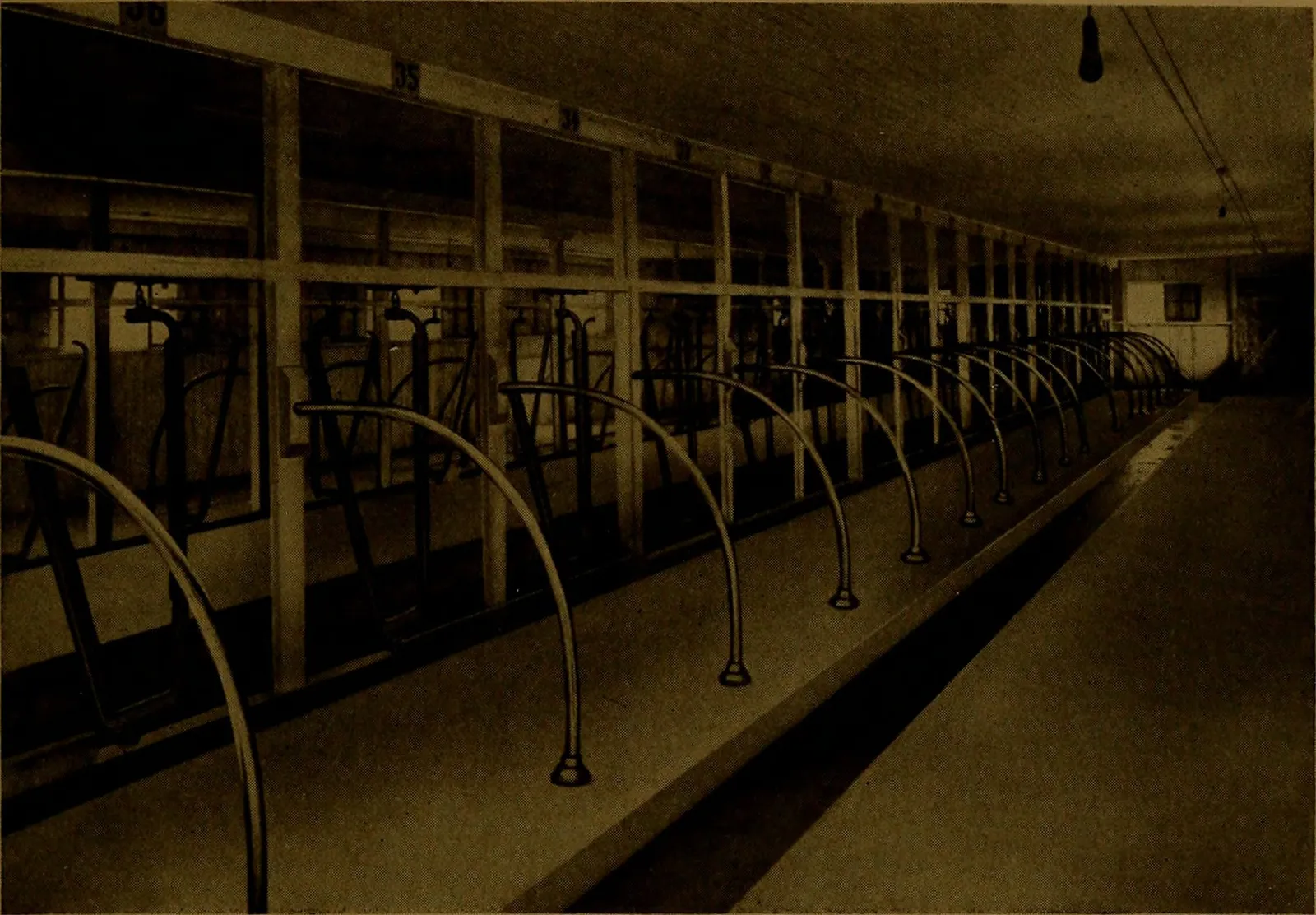
- Model milking barn interior with numbered stalls, 1914: Wikimedia Commons, from the same 1914 farming guide. Public domain.
- Florida pasture panorama with cabbage palms, 1914: Wikimedia Commons, from the same 1914 farming guide. Public domain.
No public domain photograph of the T.G. Lee plant itself turned up in the archives consulted, so the dairy photographs on this page are Florida dairy scenes of the era, from the 1914 Florida East Coast Railway farming guide, and the captions say so. Story sources: Orlando Magazine, the T.G. Lee Dairy company history, GrowthSpotter, Bungalower, The Milk District and the 407 FYI Flashbacks. The sourced district history, street by street, lives on the District Histories page.